Advice From The Barn | Ingrediant Guide
Organic Poultry Feed Ingredient Guide
Understanding what each ingredient contributes is one of the keys to successful poultry nutrition. This guide explains common organic feed ingredients used for chickens, ducks, peacocks, and guinea hens, including their nutritional benefits, recommended inclusion rates, and important limitations. Whether you're feeding laying hens, raising meat birds, or maintaining an ornamental flock, this resource will help you make more informed feeding decisions.
Author: Advice From The Barn | RCR Organic Feed Store
Introduction
At RCR Organic Feed Store, we believe the best feeding programs start with a strong foundation.
While many flock owners are interested in mixing their own feed, creating a balanced ration from scratch can be more complicated than it appears. For most situations, we recommend starting with a quality organic feed and making small adjustments based on your flock's needs.
Over the years, we've helped customers raise chickens, ducks, peacocks, and guinea hens through Minnesota winters, summer heat, and everything in between. Along the way, we've answered thousands of questions about grains, protein sources, supplements, and feeding strategies. This guide brings those conversations together in one place.
Use it as a reference to understand what common ingredients contribute to a poultry diet, how much is typically used, and where caution may be needed. As always, every flock is different, but knowing the strengths and limitations of each ingredient can help you make better feeding decisions.
Quick Reference Guide
| Ingredient | Category | Primary Benefit | Typical Use | RCR Recommended Maximum | Species Notes |
|---|---|---|---|---|---|
| Grain | Energy | Year-round energy source | TBD | Most poultry species | |
| Oats | Grain | Fiber and energy | Excellent supplemental grain | TBD | Most poultry species |
| Wheat | Grain | Energy and protein | Common feed ingredient | TBD | Most poultry species |
| Barley | Grain | Fiber and energy | Often used in mixed rations | TBD | Most poultry species |
| Peas | Protein | Protein replacement for soy | Protein supplement | 20 percent | Do not exceed 20 percent of ration |
| Soybean Meal | Protein | High protein | Major protein ingredient | TBD | Common in balanced feeds |
| Black Oil Sunflower Seeds | Supplement | Fat and energy | Feathering and winter support | TBD | Treat or supplement |
| Flax Seed | Supplement | Omega-3 fatty acids | Nutritional supplement | TBD | Use in moderation |
| Alfalfa Meal | Forage | Vitamins and fiber | Supplemental ingredient | TBD | Excellent green feed source |
| Oyster Shell | Mineral | Calcium | Free-choice supplement | TBD | Layers only |
| Grit | Mineral | Digestion | Essential with whole grains | TBD | Required for grain feeding |
| Kelp | Mineral | Trace minerals | Supplemental nutrition | TBD | Supplement only |
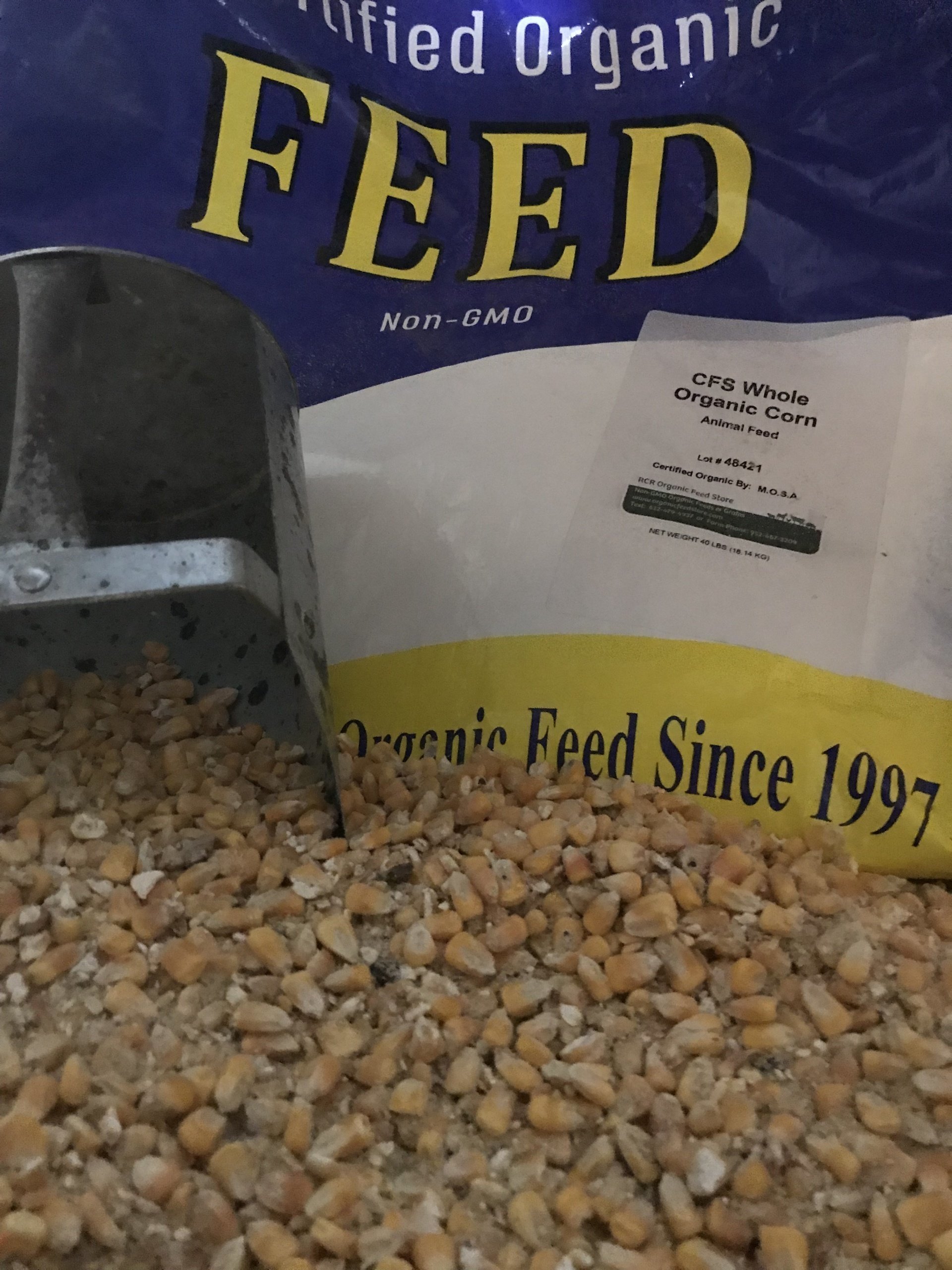
Whole Corn
Primary Benefit: Energy
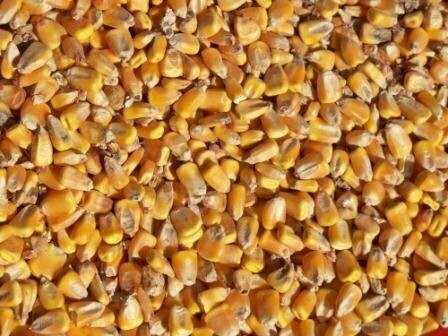
Whole corn is a popular supplemental grain used by poultry owners to provide additional energy and encourage natural scratching and foraging behaviors. It is commonly fed to chickens, ducks, peacocks, and guinea hens, particularly during cold weather when birds require additional calories.
Many flock owners also use whole corn as part of scratch grain mixes or as an occasional treat.
RCR Recommendation
Whole corn can be an excellent addition to a feeding program when used as a supplement to a balanced feed. It is particularly popular during Minnesota winters and as part of free-range management programs.
Things to Watch
While whole corn is an excellent energy source, it does not provide the complete nutrition birds need. Feeding too much whole corn can dilute protein, vitamins, minerals, and amino acids found in a balanced feed.
RCR Tip
Think of whole corn as fuel for your flock. It can provide valuable energy and enrichment, but it works best when paired with a complete feed that supplies the nutrients birds need for long-term health and production.
Ground Peas (and Whole Peas)
Primary Benefit: Protein
Peas are one of the most popular protein ingredients used in organic poultry feeding programs. They provide a plant-based source of protein and can help reduce reliance on soybean meal in some rations.
At RCR, we offer both whole peas and ground peas. While both can be used successfully, we typically recommend ground peas because they are easier for birds to consume and mix more uniformly throughout a feed ration.
RCR Recommendation
Peas can be an excellent protein ingredient when used as part of a balanced feeding program. We often recommend ground peas for customers looking to boost protein levels or customize an existing feed mix while maintaining good ingredient distribution throughout the ration.
Things to Watch
One of the most common mistakes we see is feeding too many peas.
While peas are a valuable protein source, we generally recommend keeping peas at 20% or less of the total ration. Exceeding this level can create nutritional imbalances and may reduce overall feed performance.
As with any ingredient, peas work best when included as part of a balanced feed rather than becoming the primary ingredient.
RCR Tip
Peas are a great way to add protein to a ration, but more is not always better. We typically recommend ground peas and a maximum inclusion rate of 20% for most poultry feeding programs.
Oats
Primary Benefit: Fiber and Energy
Oats are a popular grain used in many poultry feeding programs. They provide both energy and fiber, making them a useful ingredient for flock owners looking to add variety to their birds' diet.
Many poultry owners feed oats as part of a scratch mix, custom feed blend, or occasional supplement alongside a balanced ration.
RCR Recommendation
Oats can be an excellent supplemental grain for chickens, ducks, peacocks, and guinea hens. We recommend using oats as part of a balanced feeding program rather than as a replacement for complete feed. Oats work particularly well when mixed with other grains to create variety and encourage natural foraging behaviors.
Things to Watch
While oats provide valuable energy and fiber, they contain less energy than corn. Feeding excessive amounts of oats may dilute the overall nutrient density of a ration, especially for birds with high production demands. As with most supplemental grains, moderation is important.
RCR Tip
Oats are a great way to add variety to your flock's diet. When combined with a quality complete feed, they can be a useful part of a well-rounded feeding program while encouraging natural scratching and foraging behaviors.
Barley
Primary Benefit: Fiber and Energy
Barley is a versatile grain that provides both energy and fiber for poultry. It is commonly included in mixed grain rations and can be a useful ingredient for chickens, ducks, peacocks, and guinea hens. Many flock owners use barley to add variety to their feeding program while supporting normal digestion and overall flock health.
RCR Recommendation
Barley can be a valuable addition to a balanced feeding program, especially when used alongside other grains and a quality complete feed. It works best as part of a diverse ration rather than as the primary grain source.
Things to Watch
Barley contains more fiber than corn, which can be beneficial in moderation but may reduce the overall energy density of a ration if fed in excessive amounts. As with other grains, feeding too much barley can dilute the protein, vitamins, and minerals provided by a complete feed.
RCR Tip
Barley is a great grain for adding variety to a flock's diet. We often view it as one piece of a balanced feeding program rather than a stand-alone ingredient. A mixture of grains often delivers better results than relying too heavily on any single ingredient.
Wheat
Primary Benefit: Energy and Protein
Wheat is a commonly used grain in poultry feed that provides both energy and a modest amount of protein. It is frequently included in complete feeds and custom grain mixes for chickens, ducks, peacocks, and guinea hens. Many flock owners appreciate wheat because birds typically consume it readily and it blends well with other grains.
RCR Recommendation
Wheat can be an excellent ingredient in a balanced feeding program and works well as part of a mixed-grain ration. We view wheat as another useful tool for adding variety while helping maintain a diverse diet.
Things to Watch
Like other grains, wheat should be fed as part of a balanced ration rather than becoming the primary source of nutrition. Feeding excessive amounts of wheat can reduce the overall balance of protein, vitamins, minerals, and amino acids provided by a complete feed. Birds often find wheat highly palatable, so it's important to ensure they continue consuming their balanced feed first.
RCR Tip
Wheat is a versatile grain that fits well into many poultry feeding programs. Think of it as one piece of the puzzle. The best feeding results typically come from combining quality feed with a thoughtful mix of supplemental ingredients rather than relying too heavily on any single grain.
Soybean Meal
Primary Benefit: High-Quality Protein
Soybean meal is one of the most commonly used protein ingredients in poultry feed. It provides a concentrated source of protein along with essential amino acids that support growth, feather development, egg production, and overall flock health. Because of its protein content, soybean meal is often used to balance grains such as corn, oats, wheat, and barley, which are primarily energy ingredients.
RCR Recommendation
Soybean meal is an effective way to increase protein levels in a ration. It can be particularly useful for laying hens, growing birds, and flocks that receive supplemental grains or scratch. When customers are adding more energy ingredients to a feed program, soybean meal is often one of the tools used to help maintain proper protein levels.
Things to Watch
Soybean meal is a protein supplement, not a complete feed. Feeding excessive amounts can create nutritional imbalances just as easily as feeding too little protein. In most situations, soybean meal should be viewed as a balancing ingredient rather than the foundation of the ration. Some flock owners also prefer to use peas or other protein sources for part of their protein needs. Regardless of the protein source selected, maintaining proper protein levels remains the goal.
RCR Tip
One of the most common feed-mixing mistakes is focusing only on energy ingredients like corn and scratch grain while forgetting protein. Soybean meal is often used to bring a ration back into balance and support healthy growth, feathering, and egg production.
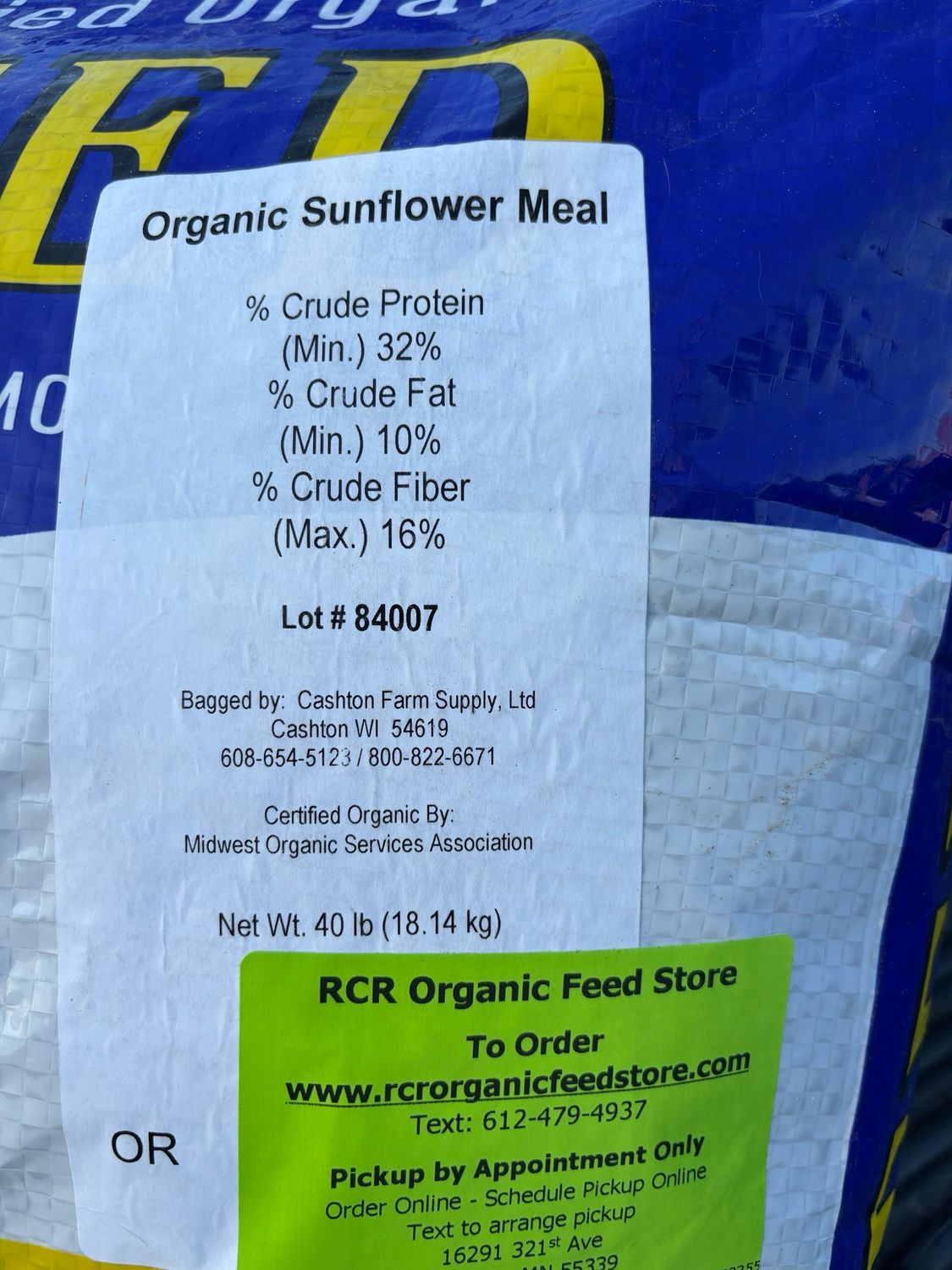
Sunflower Meal
Primary Benefit: Protein and Fiber
Sunflower meal is a plant-based protein ingredient commonly used in poultry feed. In addition to providing protein, it also contributes fiber and can help add diversity to a ration. Many flock owners looking to reduce their reliance on soybean meal consider sunflower meal as one of several protein sources available for poultry diets.
RCR Recommendation
Sunflower meal can be a useful ingredient in balanced poultry rations for chickens, ducks, peacocks, and guinea hens. We view it as one of several protein ingredients that can help complement grains such as corn, wheat, oats, and barley. As with any protein ingredient, sunflower meal works best as part of a balanced ration rather than as a stand-alone feed.
Things to Watch
While sunflower meal contributes protein, its nutritional profile differs from soybean meal and other protein sources. Successful feed formulations typically use a combination of ingredients to achieve proper nutrient balance. When adding sunflower meal, consider the overall protein level of the ration rather than focusing on any single ingredient.
RCR Tip
A balanced poultry ration requires both energy ingredients and protein ingredients. Sunflower meal can be a valuable component of that balance, especially when combined with grains and other protein sources.
Flax Seed
Primary Benefit: Omega-3 Fatty Acids and Energy
Flax seed is a nutrient-dense ingredient that provides energy, healthy fats, and omega-3 fatty acids. It is often added to poultry rations in small amounts to enhance nutritional diversity and support overall flock health.
Many poultry owners are interested in flax seed because of its omega-3 content and its potential to contribute to a more varied feeding program.
RCR Recommendation
Flax seed is best used as a supplemental ingredient rather than a major component of the ration. Small amounts can be incorporated into feeding programs for chickens, ducks, peacocks, and guinea hens as part of a balanced diet.
As with most specialty ingredients, flax seed works best when combined with a quality complete feed and other complementary ingredients.
Things to Watch
Flax seed is a rich ingredient, so moderation is important. Adding too much can unnecessarily complicate a ration without providing additional benefits.
When evaluating any feed mix, focus on the overall nutritional balance rather than trying to maximize a single ingredient.
RCR Tip
Flax seed is one of those ingredients where a little goes a long way. We typically view it as a nutritional enhancement rather than a primary feed ingredient. Start with a balanced feed first, then use ingredients like flax seed to fine-tune the ration.
Quick Reference Guide
A bag of feed isn't just a bag of feed. The guaranteed analysis tells you what you're starting with. For example, a 17% layer feed contains 17% protein before anything is added. As soon as additional ingredients are mixed in, the nutritional values begin to change. Sometimes that change is intentional. Sometimes it's not.
A Real Example
Let's look at a common winter feeding situation. A customer with laying hens wants to add corn for extra winter energy. They start with:
40 pounds of 17% layer feed - Soy or Soy Free doesn't matter
Then add:
5 pounds of whole corn. Corn is an excellent energy source. But corn contains less protein than most layer feeds. As a result, the overall protein level drops. The protein didn't disappear. It was simply diluted. This is one reason we often remind customers:
Corn is fuel for the furnace. Protein is the building material.
Feed Math vs. Feed Ingredients
Many people focus on ingredients. Experienced feeders focus on nutrients. The birds don't care what the bag says. They care about what is actually in the feeder.
For example:
- Corn primarily adds energy.
- Soybean meal primarily adds protein.
- Sunflower seeds add energy and fat.
- Higher protein feeds can help offset protein dilution.
Understanding the role of each ingredient is more important than chasing the perfect recipe.
Feed Formulas Look Great On Paper
Animals sometimes have other ideas. We've seen plenty of feed formulas that looked excellent on paper.
Then the chickens picked around half the ingredients. Or left the peas in the feeder. Or sorted out the parts they liked best. A feed program only works if the animals actually eat it.
The Best Place To Start
Before changing a ration, ask yourself: What am I trying to accomplish?
- More energy?
- More protein?
- Better feather condition?
- Lower feed costs?
- Improved production?
Once you know the goal, the feed math becomes much easier.
Final Thoughts
Making your own feed can be rewarding. Understanding the math behind the feed is even more important. Start with the numbers. Understand what each ingredient contributes. Pay attention to what the animals are telling you. And remember:
The feed tag starts the conversation. The animals finish it.
About Advice From The Barn
Advice From The Barn shares practical knowledge, feeding experience, and lessons learned from more than 25 years of raising animals, helping customers, and continuing to learn.
← Return to Advice From The Barn


Barley Whole Grain
Corn Whole


Flax Seed Whole

Peas Field - Whole


Oats - Whole


Whole Wheat


Alfalfa Pellets

Kelp Meal